Travel Requirements to Enter China
Vaccination and travel insurance
While COVID-19 vaccinations are no longer mandatory, travellers are encouraged to stay up to date with vaccines like influenza and hepatitis A. Travel insurance isn’t compulsory but may be required by some airlines or tour groups.
Visa application
Singaporeans enjoy visa-free entry to China for stays up to 30 days (for tourism, business, or family visits). If you're studying, working, or staying long-term, you’ll need to apply for a relevant visa (X, Z, Q, etc.). Check with the Chinese Embassy or ICA for the latest updates.
That said, there are certain travel circumstances where Singaporeans would need a visa to travel to China.
Source: Chinese Visa Application Service Centre
How to Choose Travel Insurance for Your China Trip?
Selecting the best travel insurance plan for your China trip largely depends on what your travel needs and preferences are. Here’s a step-by-step approach to help you narrow down your choices:
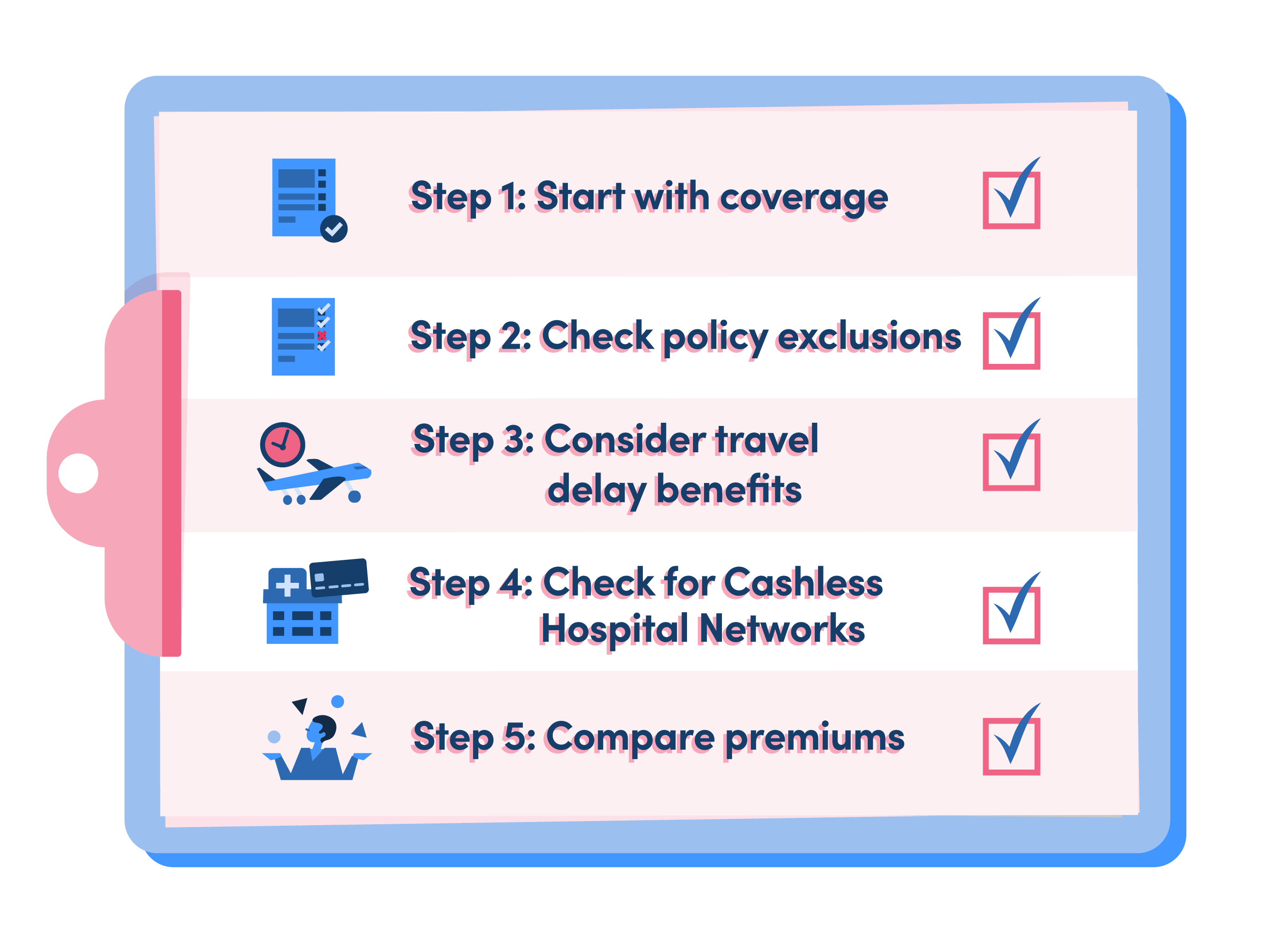
Step 1: Start with coverage
Look for travel insurance plans offering sufficient coverage for overseas medical expenses, trip disruptions or delays, and protection against baggage damage and/or loss.
Step 2: Check policy exclusions
Not all travel insurance policies automatically cover riskier adventure activities or pre-existing medical conditions by default. For instance, if you’re planning to go hiking in Zhangjiajie or skiing in Harbin, look for a plan with adventure sports add-on.
Travellers with pre-existing conditions like asthma, diabetes, or heart-related concerns should choose insurers that offer PreX (pre-existing condition) coverage, particularly for elderly travellers or those on ongoing treatment.
Step 3: Consider travel delay benefits
Travel disruptions and delays are becoming more common nowadays due to bad weather, flight overbookings, or air traffic congestion in major hubs like Beijing or Guangzhou. A robust travel insurance plan should include travel delay benefits, typically offering fixed cash payouts for every X-hour (e.g. 6 or 12 hours) delay.
These payouts can help cover meals, lounge access, unexpected hotel stays, and may also reimburse unused bookings or rescheduled transport. Some plans even include trip curtailment if your journey is cut short due to emergencies.
Step 4: Check for Cashless Hospital Networks
In mainland China, getting medical treatment can be expensive and logistically challenging without upfront cash, especially at international hospitals. That’s why, choosing a travel insurance plan with cashless medical arrangements at partner hospitals comes in clutch during these situations. Some insurers even list their hospital network in-app, making it easier to locate the nearest approved panel clinic or hospital. With direct billing, your insurer will then settle the medical costs with the facility, saving you time, paperwork, and out-of-pocket stress during emergencies.
Step 5: Compare premiums
Once you’ve shortlisted a handful of travel insurance plans, compare their premiums to find one that best fits your budget without compromising on your preferences for coverage scope or key benefits.
Best China Travel Insurance Plans in 2026
Best for | Travel insurance plan | Coverage | Premium |
|---|
Budget travel | MSIG TravelEasy Lite | Up to $50,000 overseas medical expenses Up to $1,000 for baggage damage/loss | From $19.60 |
For pregnancy and families | MSIG TravelEasy Pre-Ex Elite | Up to $2,000 for incidental expenses overseas incurred from pregnancy-related illnesses | From $100.50 |
Extreme sports and flight disruptions | TIQ Entry | Up to $200,000 overseas medical expenses Up to $5,000 for trip cancellation | From $26.25 |
Pre-existing conditions (especially for elderly) | HL Assurance Travel Protect360 Basic | Up to $150,000 overseas medical expenses | From $25.60 |
Overseas medical expenses | DirectAsia Voyager 500 | Up to $500,000 overseas medical expenses | From $38.56 |
COVID-19 coverage | FWD Premium | Up to $200,000 overseas medical expenses | From $25.87 |
Disclaimer: Figures are based on a 1-week single-trip to China. Coverage and prices are accurate at the time of writing, and are subject to change without prior notice.
Other good travel insurance benefits to look out for include coverage for missed connections, hospital cash benefits, and automatic coverage extension in events of being stranded overseas due to emergencies.
How Travel Insurance Covers You in Unforeseen Events or Natural Disasters
For context, natural disasters like earthquakes, typhoons, or pandemics can be classified as “known events” once they’ve been publicly reported in the media or flagged by official travel advisories.
Baggage & personal belongings coverage
Some travel insurers like Etiqa do cover baggage loss or damage caused by natural disasters (or an Act of God), including personal items like travel documents or laptops. However, we must specify that if the disaster is already a known event or reported, it may be excluded from claims under the policy’s known event clause. Moreover, reimbursement limits apply per article—a set of items, a laptop, or other types of personal effects.
💡 MoneySmart Tip
Use trusted online comparison tools like MoneySmart's travel insurance comparison to explore coverage limits, premiums, and policy features across leading insurers in Singapore—helping you find the right insurance plan for your trip, quickly.
Trip curtailment, cancellation, or travel delay coverage
If your trip is cancelled or delayed due to a disaster, you can typically claim non-refundable transport and accommodation costs—as long as the disruption occurred within 30 days of your scheduled trip. Travel insurers like DirectAsia offer compensation for travel delays with maximum claim amounts limited per person/family, but payout caps generally vary across providers.
Worldwide medical costs coverage
Injury from a natural disaster? Most travel insurance plans cover this under overseas medical expenses. For instance, if you sustained an accidental injury due to a natural disaster, FWD First travel insurance plan offers up to $1 million for emergency medical treatment incurred overseas, including outpatient, hospitalisation, surgery, and emergency repatriation costs.
What is the Average Cost of Travel Insurance to China?
With so many China travel insurance plans available, comparing them all can feel overwhelming. To help you cut through the noise, here’s the cost breakdown of a 1-week single-trip travel insurance plan to China.
Insurer | Overseas medical expenses | Trip cancellations | Baggage damage/loss | Total premiums |
|---|
Allianz Travel | Up to $1 million | Up to $10,000 | Up to $5,000 | From $23.31 |
DirectAsia | Up to $500,000 | Up to $15,000 | Up to $5,000 | From $26.78 |
FWD | Up to $1 million | Up to $15,000 | Up to $7,500 | From $25.87 |
Great Eastern | Up to $1 million | Up to $15,000 | Up to $8,000 | From $24 |
HL Assurance | Up to $750,000 | Up to $15,000 | Up to $8,000 | From $25.60 |
Income | Up to $1 million | Up to $15,000 | Up to $8,000 | From $25.29 |
MSIG | Up to $1 million | Up to $15,000 | Up to $7,500 | From $19.60 |
Singlife | Up to $1 million | Up to $15,000 | Up to $5,000 | From $30.91 |
Sompo | Up to $500,000 | Up to $10,000 | Up to $1,000 | From $85 |
Starr | Up to $1 million | Up to $15,000 | Up to $7,500 | From $23.34 |
Tiq by Etiqa | Up to $1 million | Up to $10,000 | Up to $3,000 | From $26.25 |
UOI | Up to $700,000 | Up to $10,000 | Up to $6,000 | From $68 |
Disclaimer: Figures are accurate at the time of writing. Coverages and premiums are subject to change by the insurer without prior notice.
MoneySmart Tip
Based on the travel insurance plans offered by 12 travel insurers here on MoneySmart, the average cost of a comprehensive travel insurance plan for a 1-week China trip is: $404.95 ÷ 12 = around $33.75


 Why Trust MoneySmart?
