Best Seasons to Visit Switzerland
Switzerland is a year-round destination, with each season offering something unique:
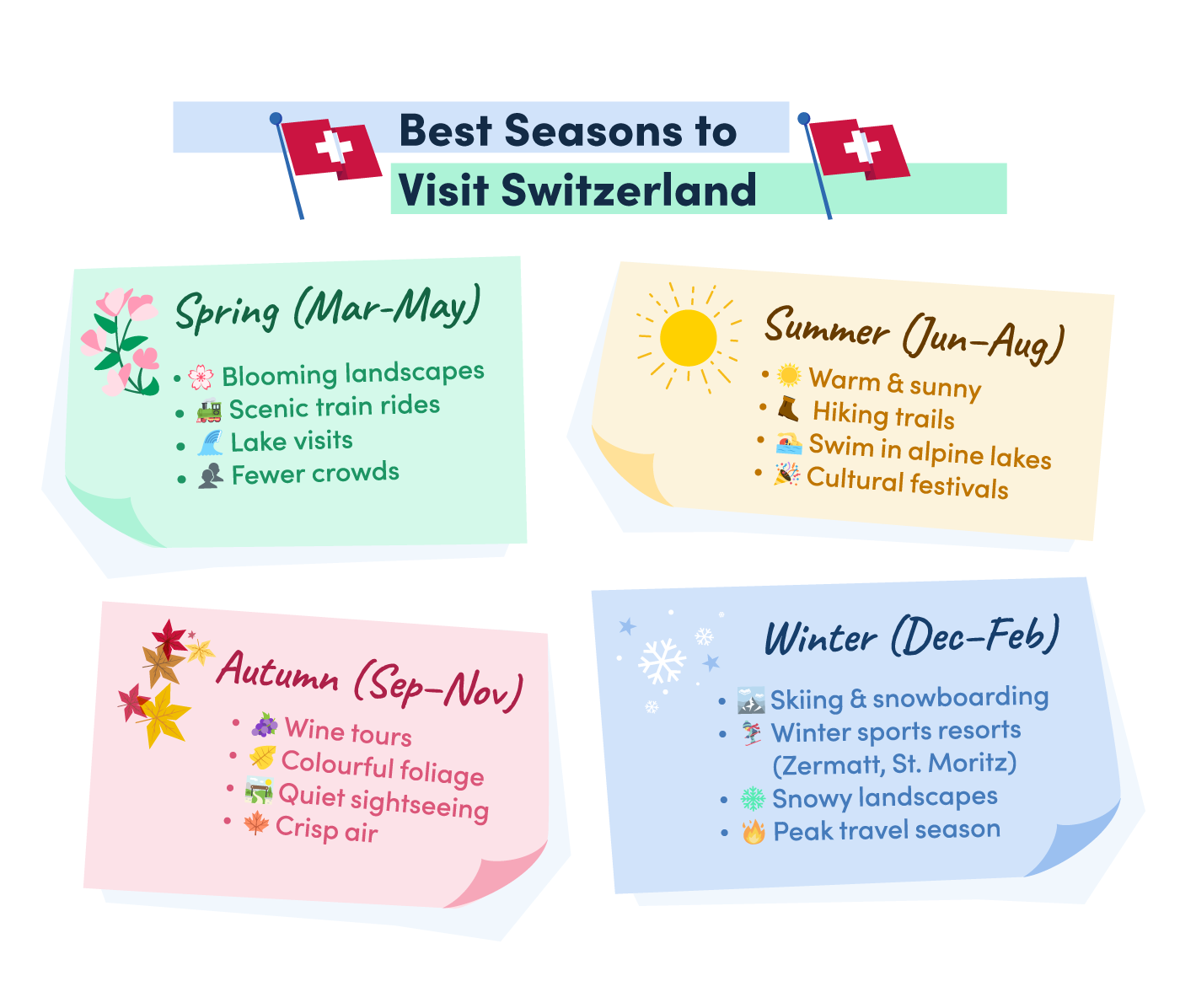
Switzerland shines in every season. Spring brings colourful blooms and lighter crowds, while Summer is perfect for hiking, festivals, and lake adventures. Autumn offers crisp air and vineyard tours in a calmer setting, while Winter is the peak season, drawing travellers for skiing, snowboarding, and alpine resorts. Choose your travel dates based on whether you prefer lively festivals, outdoor sports, or a quieter escape.
MoneySmart Tip
If you plan to try skiing, paragliding, or other adventure activities, ensure your travel insurance includes an add-on for adventure sports coverage.
7 Days Itinerary in Switzerland
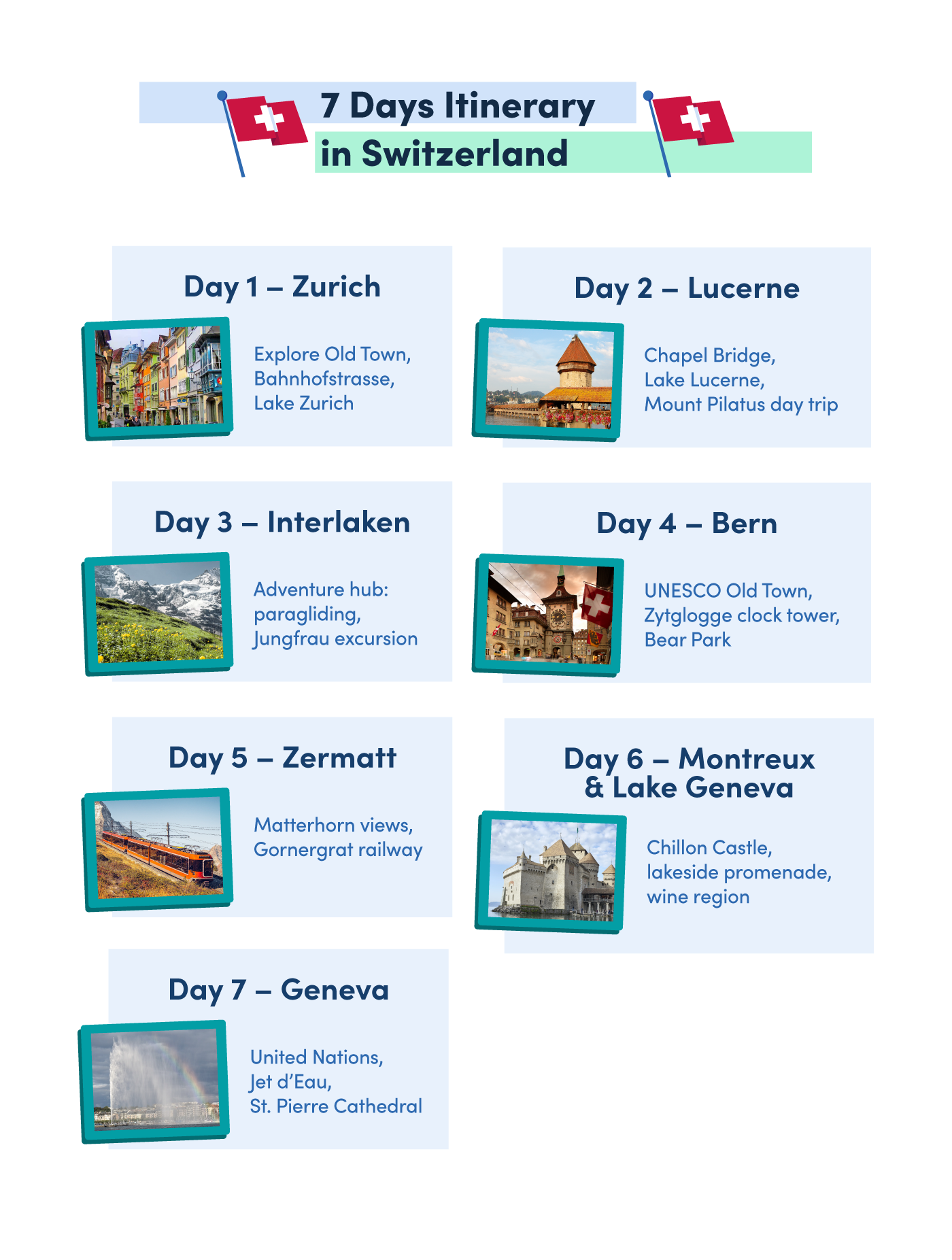
A week in Switzerland is enough to experience a mix of alpine scenery, charming cities, and cultural highlights. Here’s a simple 7 days itinerary in Switzerland that balances sightseeing with relaxation.
Travel Requirements to Enter Switzerland
Vaccination and travel insurance
There are currently no mandatory vaccination requirements for Singaporeans visiting Switzerland.
However, comprehensive travel insurance to Switzerland is strongly recommended to protect against unexpected medical costs. In fact, for certain visa applications within the Schengen Area, travel insurance is a requirement—your policy must include at least €30,000 in medical coverage across the Schengen Area if you need a visa.
Make sure your policy includes sufficient medical coverage and add-ons (such as adventure sports coverage) if you plan to ski or hike in the Alps.
Visa Application
Because Switzerland is part of the Schengen Area, travellers enjoy easy access across 29 European countries once inside the zone—no extra border checks between Switzerland, France, Germany, or Italy.
For Singapore passport holders, no visa is needed for stays of up to 90 days within a 180-day period when travelling for tourism or business. However, if you’re a Singapore PR or hold a passport from a country that isn’t visa-exempt, such as India, China, or the Philippines, you’ll need to apply for a Schengen visa before your trip.
Types of Schengen Visas
Visa type | What it covers |
|---|
Short-Stay Visa (Type C) | Up to 90 days within 180 days. Best for tourism, business trips, family visits, or short courses. |
Long-Stay Visa (Type D) | More than 90 days. Suited for work, study, or long-term residence. |
Airport Transit Visa (ATV) | For certain nationalities transiting through Schengen airports without formally entering. Needed for connecting flights to non-Schengen destinations. |
Purpose-Specific Visa | Granted under Type C or D depending on stay length. Used for medical treatment, cultural activities, or sporting events. |
Make sure your passport is valid for at least 3 months beyond your departure date (though 6 months validity is recommended). For the most current requirements, always check with the Swiss Embassy.
How to Choose Travel Insurance For Your Switzerland Trip?
Finding the right policy can feel overwhelming, but breaking it down into steps makes the process simpler. Here’s what to check before you buy:
Step 1: Check Schengen Requirements
If you need a visa, your policy must include at least €30,000 in medical coverage across the Schengen Area.
Even if you’re visa-exempt, this level of coverage ensures protection in Switzerland and nearby countries like Germany, France, or Italy.
Step 2: Prioritise Medical Coverage
Look for emergency hospitalisation, outpatient treatment, and medical evacuation. Switzerland’s healthcare is excellent but expensive, so robust coverage is crucial.
Step 3: Consider Trip Protection Benefits
Trip cancellation, curtailment, and travel delay coverage help recover costs if your plans are disrupted. These are especially useful if you’re booking rail passes, guided tours, or alpine resorts in advance.
Step 4: Protect Your Belongings
Coverage for lost, stolen, or delayed baggage can be a lifesaver, especially for ski equipment or electronics.
Step 5: Add Adventure Sports Coverage (If Needed)
If skiing, snowboarding, or paragliding is on your itinerary, make sure to add the appropriate adventure sports add-on.
Step 6: Compare Premiums and Coverage
Don’t just pick the cheapest option. Compare plans from various insurers to see which offers the best balance of coverage and cost. An easy way to do this is to make use of MoneySmart’s travel insurance comparison tool.
Step 7: Look for 24/7 Assistance
Choose a policy that offers round-the-clock emergency hotlines and support worldwide.
Best Travel Insurance For Your Switzerland Trip
Here’s a summary of travel insurance plans with the highest coverage limits for repatriation, luggage delay, trip cancellation, and more.
Disclaimer: Figures reflect the premiums for a 7-day trip to Switzerland before any discounts, rounded to the nearest dollar, and are accurate as of 6 Mar 2026. Coverage and premiums are subject to change by the insurers, without prior notice.
How Does Travel Insurance Cover Me in the Event of Natural Disasters or Unforeseen Events?
From snowstorms in the Alps to sudden illness, unexpected events can disrupt even the best-planned trip. A comprehensive policy ensures you’re financially protected when things don’t go as planned.
Baggage & Personal Belongings Coverage
If your luggage is lost, stolen, or delayed due to natural disasters or travel disruptions, your policy can reimburse you for essentials and replace the value of your belongings. This is especially important if you’re carrying ski gear, winter clothing, or electronics for your Switzerland trip.
Trip Curtailment, Cancellation, or Travel Delay Coverage
Adverse weather or unforeseen events such as airport closures can force you to cancel or cut short your holiday. Travel insurance helps cover non-refundable expenses like accommodation, train passes, or tour bookings, and may also provide compensation for extended delays.
Worldwide Medical Costs Coverage
Medical emergencies overseas can be costly — and Switzerland’s healthcare system, while world-class, is among the most expensive in Europe. A good policy covers emergency treatment, hospital stays, and evacuation if necessary. This applies not only in Switzerland but also if you extend your travels to neighbouring France, Germany, or Italy.
What is the Average Cost of Travel Insurance to Switzerland?
The cost of travel insurance to Switzerland depends on the length of your trip, the insurer, level of coverage, and add-ons you choose. To give you a sense of the range, here are 2 illustrative examples of single-trip plans for a 1-week stay:
Disclaimer: Figures reflect the premiums for a 7-day trip to Switzerland before any discounts, rounded to the nearest dollar, and are accurate as of 6 Mar 2026. Coverage and premiums are subject to change by the insurers, without prior notice.
Basic plans like Zurich’s start under $100, while more comprehensive options like Income’s may cost over $200. Remember that these examples are for illustration only—actual premiums vary by age, trip length, and optional add-ons.


 Why Trust MoneySmart?
