Renovation timeline: How long does renovation take?
Renovation duration by condition of property
Your renovation timeline will vary depending on the type of home you are renovating, its existing condition, and the overall scope of work involved. In general, larger or older properties tend to require more time due to additional preparation and rectification works.
New homes: Usually 8 to 12 weeks. These units often come as bare spaces, so there is less hacking required, but more carpentry, tiling, and built-in installations may be needed.
Resale properties: Typically 12 to 16 weeks. Extra time is often required for dismantling older fixtures, rewiring, and addressing hidden issues such as leaks, mould, or uneven flooring.
Minor works only: Smaller projects such as repainting or replacing flooring may be completed within 2 to 4 weeks, depending on complexity and scheduling.
Renovation key phases and timelines
Managing your renovation effectively starts with understanding each major phase and the typical timeline involved. While every project is unique, the following stages are common to most Singapore renovations.
Key phases of a home renovation in Singapore
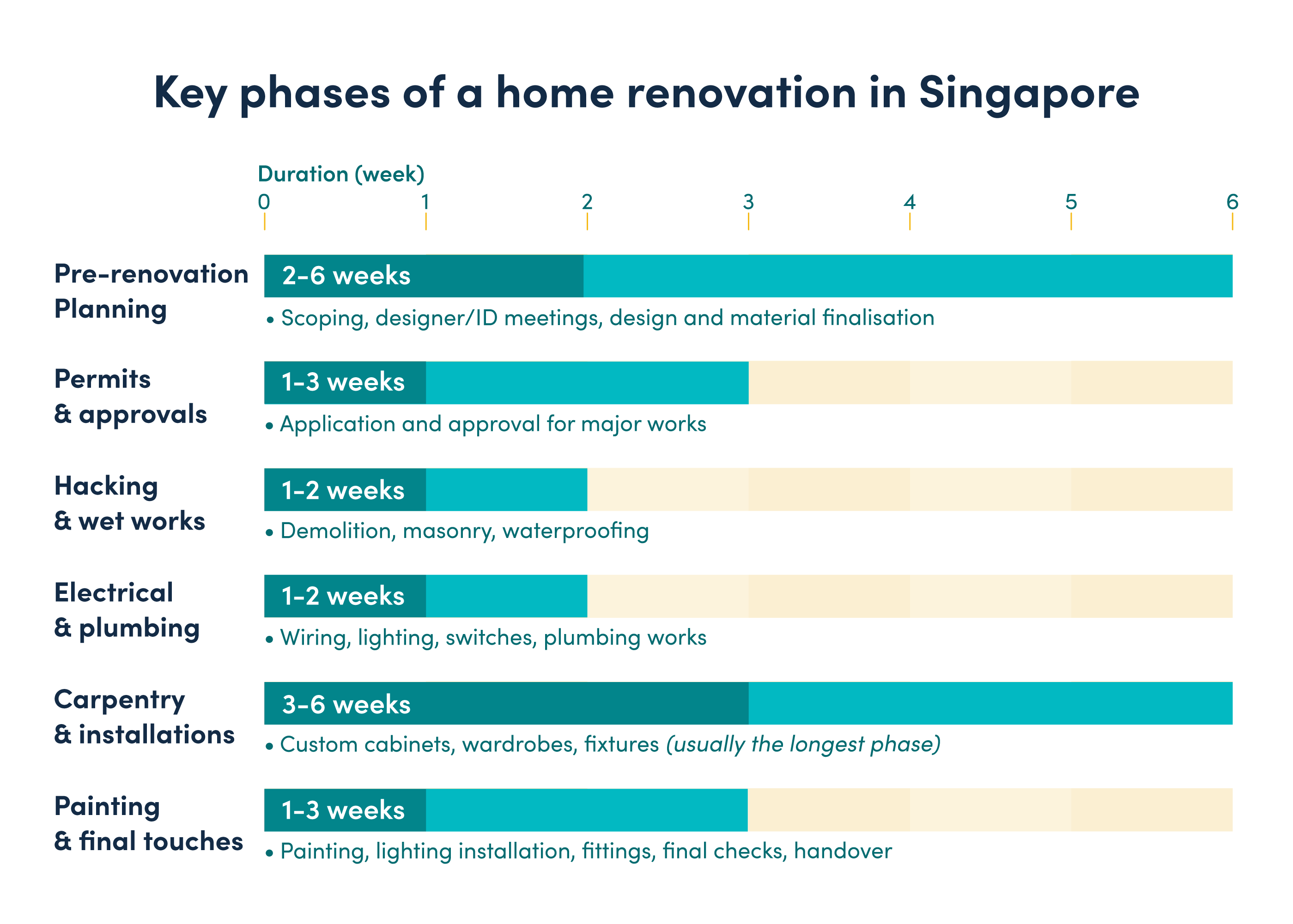
Pre-renovation planning
Permits & approvals
Hacking & wet works
Electrical & plumbing
Carpentry & installations
Painting & final touches
1–2 weeks
Painting, lighting installation, fittings, final checks, handover
Actual durations may vary, especially for larger properties or projects with extensive customisation. Discuss your expected timeline with your contractor or designer to build in an appropriate buffer.
Common factors causing delays during your renovation
Even the best-planned renovation timeline can face unexpected hold-ups. The most common reasons for delays include:
Late selection of materials: Postponing decisions on tiles, laminates, or fittings can bring work to a standstill while your contractor waits for your choices.
Hidden defects in resale properties: Issues such as plumbing leaks, mould, or faulty wiring often only become apparent after demolition begins, requiring extra time for repairs.
Festive season slowdowns: Renovation work tends to pause or slow down during public holidays, especially around Chinese New Year and the year-end period.
Long lead times for materials: If key items—such as imported fixtures or custom finishes—are delayed or out of stock, finishing works may be pushed back.
To minimise disruption, it is wise to build in at least a 2-week buffer when planning your renovation timeline. This additional time helps absorb minor setbacks, such as approval delays or shipment problems, and allows for a smoother renovation experience overall.
Payment Timeline: What is a payment checklist for renovation projects in Singapore?
In Singapore, renovation payments are typically structured around a milestone-based schedule. This means that each payment is only made after a specific stage of work is completed and verified. Adopting this staged approach not only protects homeowners from unnecessary financial risk, but also reduces the likelihood of contractor abandonment, as funds are released progressively in line with visible progress.
💡 Planning a home makeover but unsure which loan suits you best?
Let us take the stress out of it! Compare renovation loans from all major banks in Singapore at a glance on our MoneySmart’s renovation loan comparison page!
Standard payment milestones in Singapore
Most renovation projects follow a series of key payment milestones, each tied to actual work completed. While percentages may vary depending on your agreement, the following structure is common:
Initial deposit (10–20%): Paid when you sign the contract. For larger projects, it is advisable to keep the deposit on the lower end of this range.
Commencement payment (30–40%): Released when major site works—such as hacking, demolition, or masonry—begin.
Mid-project milestones (10–20%): Payment is typically divided across specific completed works, such as plumbing, electrical installation, or ceiling and partition work.
Carpentry and installation (20–30%): Due when primary built-in items—like kitchen cabinets or wardrobes—are delivered or installed.
Final retention (5–10%): Withheld until all works are finished, defects rectified, and the home has passed final inspection.
These percentages serve as a reference point and can be adjusted to fit your particular renovation agreement. The key is to ensure that every payment aligns closely with tangible progress on site.
Example of a typical renovation payment schedule:
Milestone | Description | % of total contract sum |
Contract signing (deposit) | Upon confirmation of quotation and signing of agreement | 10% |
Before commencement of work | Prior to starting site works, permits, or material orders | 40% |
After hacking/dismantling completed | Once demolition and site preparation are finished | 15% |
After carpentry measurement & fabrication begins | Carpentry measurement confirmed and fabrication underway | 25% |
Upon substantial completion/handover | All major works complete, home ready for handover | 10% |
Pre-payment verification checklist
Before releasing any renovation payment, it is essential to carry out some basic checks to protect your interests. A structured verification process helps ensure that payments are only made for work that has genuinely been completed, and that you maintain clear documentation throughout the project. Here’s a quick reference checklist to follow before making each instalment payment:
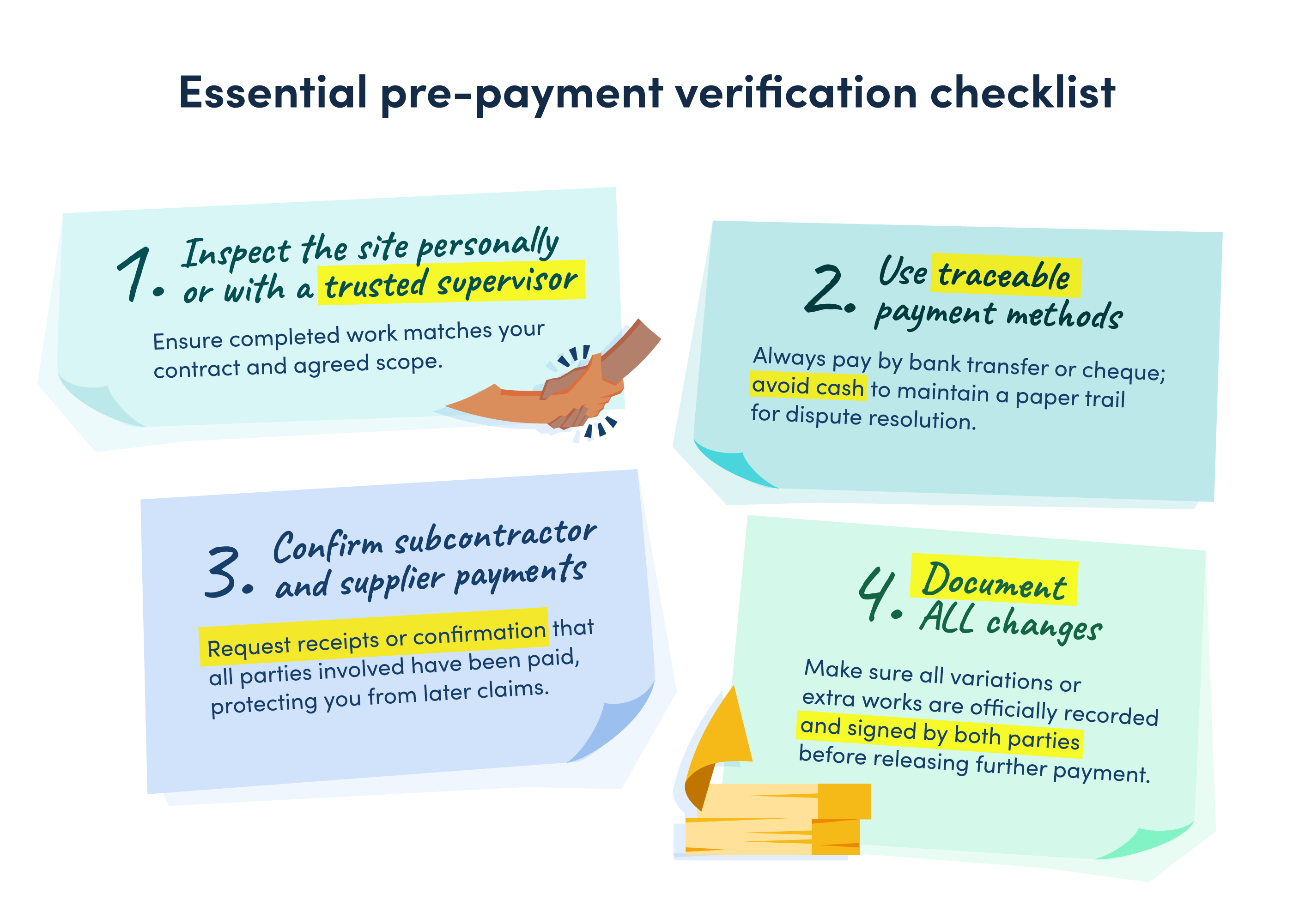
Essential pre-payment verification checklist
Inspect the site personally or with a trusted supervisor
Use traceable payment methods
Confirm subcontractor and supplier payments
Document all changes
Taking a few extra minutes for these checks at each stage helps prevent disputes, supports smoother project management, and safeguards your renovation investment.
Protective measures
For added peace of mind, it is worth considering renovation firms that hold recognised accreditations, such as CaseTrust. These companies are required to follow structured and transparent payment schedules, offering greater security for your deposit.
Another option is to use neutral or escrow-style payment services. These platforms hold your funds securely and only release each payment tranche once you have approved the completed milestone. Both approaches can help protect your interests and ensure that your renovation progresses according to plan.
Loan Timing: How to prepare a payment schedule for renovation in Singapore?
Renovating your home is a significant financial commitment. One prudent approach is to rely on your personal savings to fund the renovation, as this helps you avoid additional costs from interest charges and processing fees. However, using your savings may reduce your cash reserves, potentially leaving you less prepared for emergencies.
In Singapore, many homeowners turn to renovation loans to ease the upfront financial burden. These loans are generally reserved for the main renovation works, while personal loans are often used for other expenses, such as furnishing and decorating your new home.
Loan Repayment Calculator
See how much you need to pay back per month
You can expect to pay:
S$ 2,124.00 / month
*estimated monthly payment
Total cost of loanS$ 50,976.00
Total interestS$ 976.00
Budgeting & contingency
It is wise to build a contingency buffer of 10–15% into your renovation budget, to cover unexpected site or material issues that may arise. If you intend to use a renovation loan, be aware that the funds are typically disbursed directly to your contractor, and only for pre-approved structural or built-in works. Review the payment disbursement process in advance to ensure that the timing and amounts match both your renovation payment schedule and your own cashflow planning.
For more guidance on managing renovation expenses, check out our guide on the smartest ways to pay for home renovation in Singapore.
When should you apply for a renovation loan?
It is best to apply for your renovation loan only after you have secured your renovation contract and obtained all necessary permits, but before you make the initial deposit. Approval for a renovation loan in Singapore typically takes 1 to 7 working days. To ensure there are no delays, make sure your funds are in place before the first payment to your contractor is due.
When should you apply for a personal loan?
A personal loan is typically used towards the end of the renovation process, particularly when it comes time to purchase furniture, appliances, or other finishing touches. As a general guideline, consider applying for a personal loan about 1 month before you anticipate making these purchases. This gives you sufficient time to compare interest rates across different lenders and ensures that funds will be available when invoices are due.
💡 MoneySmart tip
Always check with your interior designer or contractor regarding the timeline for specific fixtures or appliances. Some items, such as a wall-hung toilet, may be needed earlier in the renovation, for example before hacking and demolition begin. This allows for proper installation and helps prevent delays.
💡 MoneySmart Tip
Use trusted online comparison tools like MoneySmart's personal loan comparison to review personalised rates, eligibility, and requirements across major banks in Singapore—helping you make a more informed choice quickly.
Payment best practices
When managing renovation payments, it is always advisable to use traceable methods such as bank transfers or cheques. Avoid cash payments, as these leave no record and can complicate any future disputes. You may also wish to consider using neutral or escrow-style services, which hold funds securely and only release them once both you and your contractor have agreed that a project milestone has been achieved.
Before any work begins, make sure your contract clearly outlines every payment milestone, the specific criteria for completion at each stage, and the percentage due. Maintaining an organised paper trail for all payments and site inspections will make it much easier to resolve any issues should they arise.


 Why Trust MoneySmart?