Why Planning Your Home Renovation Matters in 2026
Renovating your house isn’t just about picking tiles or paint swatches—it’s about transforming a blank slate into a space that truly feels like home. But without a clear plan, excitement can quickly turn into overwhelm. From ballooning budgets to mismatched layouts, many homeowners find themselves caught off guard by renovation pitfalls that could’ve otherwise been avoided with a little foresight.
Common mistakes to avoid
While there’s no shortage of home renovation pitfalls in Singapore, here are some notorious mistakes that’ll cost you a pretty penny (both literally and figuratively):
Ignoring HDB or condo renovation guidelines early on
Not accounting for Defects Liability Period (DLP) overlap
Underestimating renovation timelines and potential delays
Budgeting based on quotations, not real final costs
Relying solely on interior designer’s (ID) proposal without second opinions
Improper planning for power sockets and electrical points
Choosing aesthetics over maintenance in a humid climate
Failing to vet your contractor or ID thoroughly before engaging their services
Overcommitting to in-built carpentry, limiting flexibility or future resale appeal
Skipping waterproofing tests in wet areas, especially kitchens and toilets
Not accounting for furniture dimensions and delivery paths
Not future-proofing the layout and only designing for the present
Average Home Renovation Costs in Singapore in 2026
Cost by property type
Property type | Property size | Estimated renovation costs |
|---|
HDB BTO (2-room) | ~45 sqm | ~$15,000 – $30,000 |
HDB BTO (3-room) | ~65 sqm | ~$25,000 – $45,000 |
HDB BTO (4-room) | ~90 sqm | ~$35,000 – $55,000 |
HDB BTO (5-room) | ~110 sqm | ~$40,000 – $70,000 |
Resale HDB | Varies | ~$50,000 – $90,000 |
New HDB BTO | Varies | ~$20,000 – $70,000 |
Resale condo | ~100 sqm | ~$60,000 – $100,000 |
New condo | ~100 sqm | ~$40,000 – $80,000 |
Landed / Private housing | Varies | ~$100,000 – $300,000 |
Sources: omy.sg and Qanvast; Figures are estimates and vary depending on materials, existing features, and contractor/ID choices.
Breakdown by work type: Flooring, carpentry, electrical, plumbing, painting
Renovation work | Definition |
|---|
Hacking | Removal of walls, tiles, built-in fixtures Requires HDB permit if structural (e.g. removing storerooms) |
Masonry | Wall and floor tiling, cement screeding, waterproofing, floor levelling, re-tiling of bathroom or kitchen floor |
Carpentry | Any custom, in-built wooden furniture or fixtures |
Electrical works | Installation, re-routing, or upgrading of electrical systems including wiring, power points, switches, lighting fixtures, ceiling fans, and DB boxes |
Plumbing | Installing sinks, basins, toilets, heaters, floor traps, and rerouting water pipes |
Painting | Painting walls (including feature walls), ceilings |
False ceiling | Building secondary ceilings to conceal wiring and integrate recessed or cove lighting designs |
Flooring | Installing vinyl, tiles, parquet, or laminates for existing floors |
Partitioning | Creating room divisions using drywall, glass, or sliding systems to section off spaces |
Wet works | Waterproofing and tiling bathrooms, kitchens, and service yards |
To determine your renovation budget, refer to our other detailed renovation cost guide based on room type to figure out their respective estimated costs.
What Affects Home Renovation Costs in Singapore?
Planning a renovation budget isn’t simply about picking the cheapest quote—it’s also about navigating hidden fees, approval requirements, and fluctuating prices. But what exactly drives renovation costs in Singapore?
Here are several key cost factors to consider:
Room types & sizes
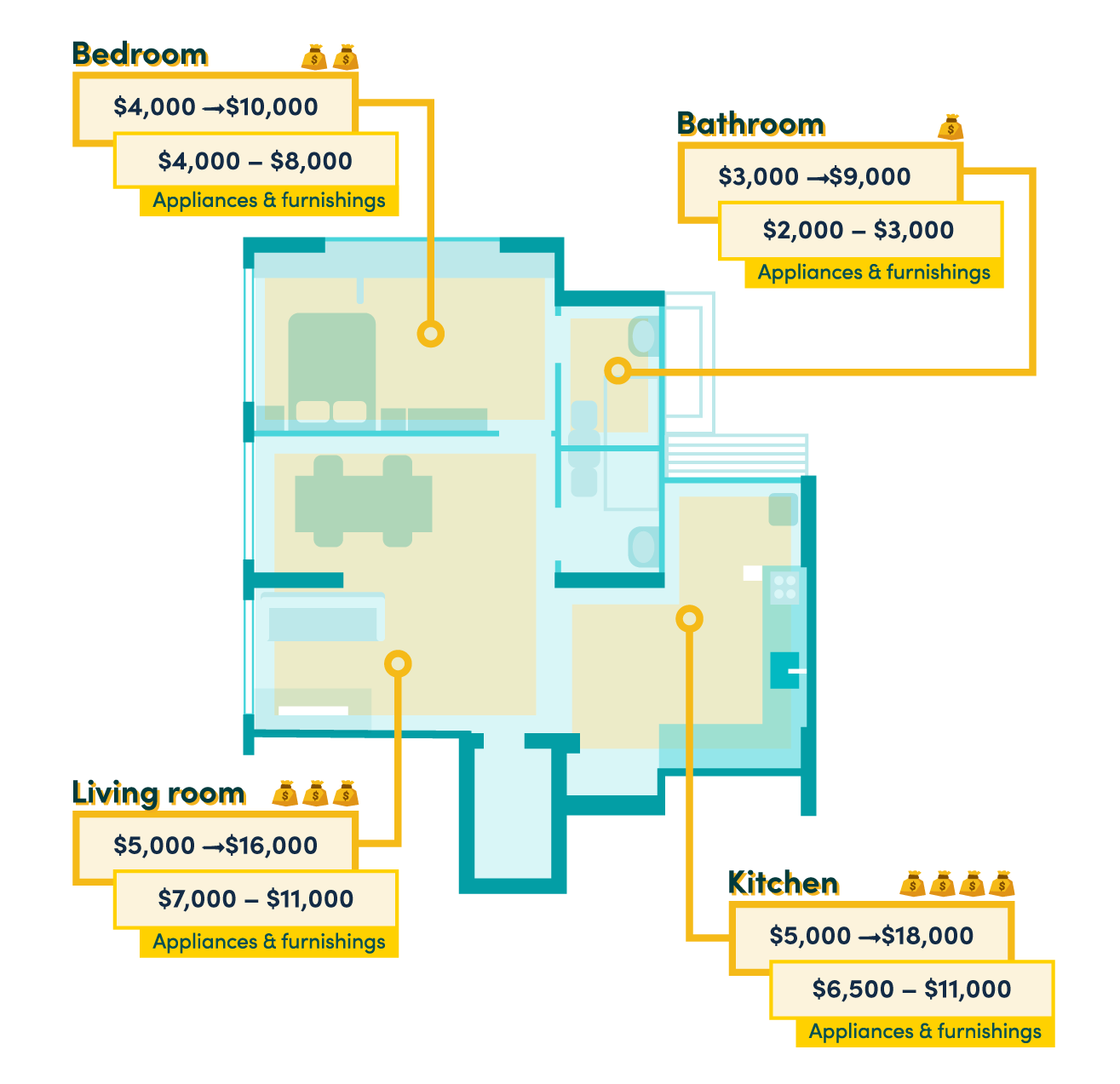
Room type | Renovation work | Estimated costs |
|---|
Living room / dining room | Flooring, painting, lighting, feature walls, media consoles, and hacking walls or glass partitioning for open concept layouts | 💰💰💰💰 Basic: $5,000 – $10,000
Extensive: $12,000 – $16,000
Appliances & furnishings: $7,000 – $11,000 |
Kitchen | Wet work (e.g. waterproofing, tiling, anti-slip floors), carpentry, electrical and plumbing work | 💰💰💰 Basic: $5,000 – $10,000
Extensive: $12,000 – $18,000
Appliances & furnishings: $6,500 – $10,000 |
Bedroom | Painting, flooring, lighting, carpentry No wet works or plumbing + lower electrical complexity | 💰💰 Basic: $4,000 – $6,000
Extensive: $8,000 – $10,000
Appliances & furnishings: $4,000 – $8,000 |
Bathroom | Carpentry, wet work, tile overlays, shower appliances | 💰 Basic: $3,000 – $5,000
Extensive: $6,000 – $9,000
Appliances & furnishings: $2,000 – $3,000 |
Source: Qanvast
Labour involved
Your hired labour significantly impacts your budget. Generally, contractors are the most affordable option, focusing on execution without design input. IDs cost more due to their creative and project management aspects and design & build firms offer comprehensive, all-in-one services charged at a premium.
If you sincerely need design expertise on a budget, consider working with a freelance designer paired with a contractor for a more cost-effective workaround.
Cost of materials
Your material choices matter. Tiles, laminates, countertops, fittings all add up, and can increase renovation costs dramatically depending on the quality. For instance, premium or imported materials like quartz or engineered wood would cost more than local or off-the-shelf alternatives. Even among vinyl flooring, prices can vary based on thickness, brand, and warranty.
Peak vs off-peak periods
The timing of your renovation plays a big role in pricing and availability. Demand typically surges before festive seasons (e.g. before Chinese New Year, Q4 of the year) driving up both labour and material costs.
Renovating during off-peak months however, can yield lower quotes, better contractor availability, and faster project timelines—translating into more meaningful cost savings.
Inflation & market volatility
While more arbitrary and less predictable, inflation and global supply chain disruptions do impact home renovation costs to a degree. Given rising costs of materials, shipping, and labour, the actual final quotes can quickly exceed the price of initial quotes.
MoneySmart Tip
To mitigate this, always include an extra 10% to 15% contingency buffer in your renovation budget to absorb unexpected price hikes between planning and execution.
How to Plan a Home Renovation in Singapore
Planning a home renovation budget can seem daunting, but no task is insurmountable if you take it step-by-step.

Start by evaluating your lifestyle needs, space usage, and home essentials. Are you planning for resale in the future once your BTO’s minimum occupancy period (MOP) is up? Do you foresee your family expanding? Or do you just want an aesthetic upgrade?
After assessing these needs and desires, it’s easier to discern and rank your non-negotiables vs nice-to-haves in guiding decisions later on.

List all fixed costs (e.g. tiles, carpentry, labour) and variable costs (e.g. appliances, decor), as well as:
Renovation cost estimates
Hidden fees like permit applications, haulage, and HDB reno deposits
A 10–20% contingency buffer
Extra budget for loan options (home loan vs personal loans)

Align early with your ID on material palette (wood, stone, laminates), colour scheme, lighting plan, and moodboard to encourage better aesthetic consistency.
Ensures a cohesive look while minimising mid-project surprises.

Identify specific renovation works needed. Hacking and structural changes? Wet work detailing like kitchen backsplashes and bathroom zones? Carpentry? Electrical rewiring like power sockets and lighting point locations? Furniture placements? These are all important aspects of planning your floor plan utilisation (pre- and post-reno) well.
A well-thought-out layout prevents blocked pathways, maximises spatial use and functionality, and fewer costly functional or design regrets down the line.

Depending on your renovation needs and budgets, choose and engage the services of your preferred renovation professional. For execution-only work, hire a contractor. For design and project management, hire an ID. For an all-rounded, turnkey solution, hire a design & build firm.
Whichever your choice, do ensure you conduct thorough vetting by reviewing their CASETrust, customer reviews, and past portfolios to determine their reliability, quality of work, and if their skillsets offered align with your desired renovation style and needs.

Next, secure the necessary renovation permits before any work officially begins. For HDB flats, submit renovation permits through an HDB-registered contractor, especially for hacking and wet works, which must comply with stipulated HDB regulations. For condos, MCST approval must be obtained and adhere to renovation hours, lift protection, and noise control requirements. These approvals are essential to ensure regulatory compliance and to avoid fines, complaints, or unnecessary delays.

Set realistic week-by-week or phase-by-phase timeline to manage expectations and keep progress. Project milestones to keep tabs on include:
Permit approvals
Demolition, wet works, tiling
Carpentry measurement and fabrication
Electrical, plumbing, aircon installation
Final touch-ups and cleaning

If you fail to plan, you plan to fail. Being a good planner means being prepared with a detailed contingency plan for hiccups like material delays or out-of-stock, budget overruns, design compromises, or worse, your ID ghosts you.

Lastly, don’t overlook what happens after the dust settles—literally. Throughout renovation, conduct regular site visits and inspections or request frequent photo updates to monitor progress and flag issues early (e.g. misaligned cabinets, faulty sockets, poor water pressure, etc.).
Once renovations are officially done, congrats! Schedule a deep clean before moving in. Remember to keep a record of all warranties, receipts, and contractor contracts in case rectifications are needed within the Defect Liability Period (DLP).
MoneySmart Tip
While Defects Liability Period (DLP) generally refers to the timeframe where defects must be rectified by the responsible party, don’t confuse the two types:
For new HDB BTO flats
The DLP refers to the 1-year period where the HDB developer is responsible for addressing and rectifying structural or workmanship defects.
For post-renovation
The DLP refers to the warranty period to correct defects offered by your contractor, ID, or design & build firm, typically lasting 6 to 12 months.
Always review your contract terms and consider enlisting a qualified defect checker to assist with pre-, during, and post-renovation checks.
Budgeting Tips to Reduce Renovation Costs
Despite attempts to set renovation budgets, it’s often more common than not to see homeowners exceeding their budgets. Try as they might, most only account for upfront, estimated costs without having enough budget buffer (remember: extra 10% to 15%) for actual renovation costs.
Allocate budget by room
The room type and size (per sqm or sqft) significantly affects renovation costs. Larger room sizes like kitchens and living rooms usually cost more to renovate, whereas smaller rooms like bedrooms tend to be cheaper.
Assuming you’re renovating a 4-room HDB BTO unit with a budget between $50,000 to $70,000, here’s how you can potentially allocate it per room:
Room type | Recommended allocation | $50,000 budget | $70,000 budget |
|---|
Living room + dining room | 25% – 30% | $13,000 | $18,000 |
Kitchen | 25% – 30% | $14,000 | $20,000 |
Bedrooms (2 – 3 rooms) | 10% – 15% per room | $15,000 | $21,000 |
Bathroom (1 – 2 rooms) | 10% – 15% total | $8,000 | $11,000 |
Must-haves vs. Nice-to-haves
Prioritise structural works, essential carpentry, and functional upgrades that can’t be added later. Aesthetic features like fluted panels or designer lighting can be deferred or swapped for more affordable alternatives to stay within budget.
Track renovation expenses
Maintain a centralised record of all renovation-related costs—quotes, invoices, deposits, and peripheral buys like lighting or appliances. Use a simple spreadsheet or budgeting app to help categorise expenses by room or renovation type, avoid duplicate spending, and better manage cash flow across each renovation phase.
Consider government grants (e.g., EASE, HIP for HDBs)
For older HDB flats, explore government schemes like EASE (Enhancement for Active Senior) or HIP (Home Improvement Programme), which subsidise essential upgrades like slip-resistant tiles, grab bars, or toilet repairs to improve mobility and safety within the flat. Typically targeted at senior residents, you may check your eligibility with HDB or your Town Council.
Avoid budget overruns
As reiterated, always include a 10% to 15% contingency buffer to mitigate unexpected or hidden costs like haulage, permit fees, material shortages, or mid-project adjustments. Request itemised quotes and always be cautious and read the fine print of vague packages like “unlimited carpentry”.
Using a Personal Loan for Renovations in Singapore
Home renovation is a significant financial commitment, and many homeowners turn to either a renovation loan or personal loan to fund it. But how do you decide which option best suits your renovation goals, spending needs, and budget?
Criteria | Renovation loan | Personal loan |
|---|
Interest rates | From 1.38% p.a. (lowest rate as seen on MoneySmart!) | From 1.00% p.a. (lowest rate as seen on MoneySmart!) |
Loan tenure | Up to 5 years | Up to 5 years, sometimes 7 years |
Loan limits | Typically up to 6X monthly income, capped at $30,000 | Typically up to 4X monthly income, or up to 8X monthly income for those with at least $120,000 annual income Mostly capped at $200,000, but varies across banks |
Fund flexibility | Strictly for home renovations Must submit documents like contractor quote or invoice, proof of ownership, HDB or MCST renovation permit | For any purpose |
Income eligibility | Depends on bank Usually $20,000 – $30,000 | Depends on bank Singaporeans/PRs: $20,000 – $30,000
Foreigners: $45,000 – $60,000 |
Upfront fees | May include processing fees (1 – 2%), disbursement fees, or admin charges | |
Loan approval & funds disbursement | May take 3 – 5 working days, subject to document approvals Funds directly disbursed to renovation vendor | Almost instantaneous; within 1 – 2 working days Funds disbursed directly to linked bank account |
READ: Personal Loan vs Renovation Loan: Which is Better for Home Improvement?
💡 MoneySmart Tip
Use trusted online comparison tools like MoneySmart's personal loan comparison to review personalised rates, eligibility, and requirements across major banks in Singapore—helping you make a more informed choice quickly.


 Why Trust MoneySmart?
 (1).png)