Best Credit Cards For Utility (Electricity) Bills
3 Benefits of Using Credit Cards to Pay Electricity & Utility Bills


This allows us to better monitor spending, stay organised, and better leverage credit card benefits where applicable.

As mentioned above, this should come as a no-brainer. Strategically employing the right credit card to earn cashback, miles, or reward points on your electricity bills helps you accumulate rebates faster and more efficiently.
READ: 3 Best Credit Card Pairings for Maximising Cashback, Miles, and Rewards
Key Takeaways About Credit Card-Utility Bill Compatibility
- Merchant Category Code (MCC) matters. Most utility payments are coded under MCC 4900 (utilities). Many cards exclude this category from rewards, but UOB and OCBC treat SP Group and recurring electricity differently. Reward eligibility, payment methods, and terms can change. Always check the official banking and provider websites for the most up-to-date information before each billing cycle and ensure your payment triggers the correct MCC.
- Payment method affects eligibility. Direct app/online payments are typically eligible; GIRO, AXS, and third-party payment services (e.g. bill aggregators like CardUp) usually don't earn rewards.
- Set up recurring payments. For OCBC 365, ensure your bills are set up as automatic recurring payments, not one-off charges, to qualify for its bonus 3% cashback rate.
- Combine utility payments with other spending. Both cards reward other categories (groceries, dining, transport). Pairing utility bills with these purchases helps you hit minimum spend thresholds and maximise cashback without overspending.
- Leverage on government rebate and discount schemes. To help ease Singapore households on utilities costs, the government has also issued out several bill rebates & discounts during yearly Budgets. For instance, quarterly U-Save Rebate schemes were announced during Budget 2025.
- April 2025: $110–$190 U-Save rebates
- July 2025: $110–$190 U-Save rebates
- October 2025: $110–$190 U-Save rebates
This is separate from card-based deals and will not affect card rewards.
- Re-verification is key. Utility bill payment exclusions, accepted channels, and promos update regularly as banks, the EMA, and electricity providers refresh policies. Always review your chosen provider's and card issuer's official policy pages before each bill cycle.
Best Credit Cards for Paying Utility (Electricity) Bills in Singapore
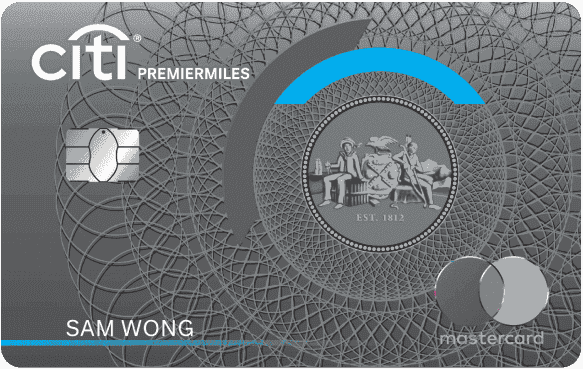
Citi PremierMiles Card
- All Local Spend
- S$1 = 1.2 miles
- All Foreign Currency Spend including Retail and Online
- S$1 = Up to 2.2 miles
- Annual Fee
- S$196.20
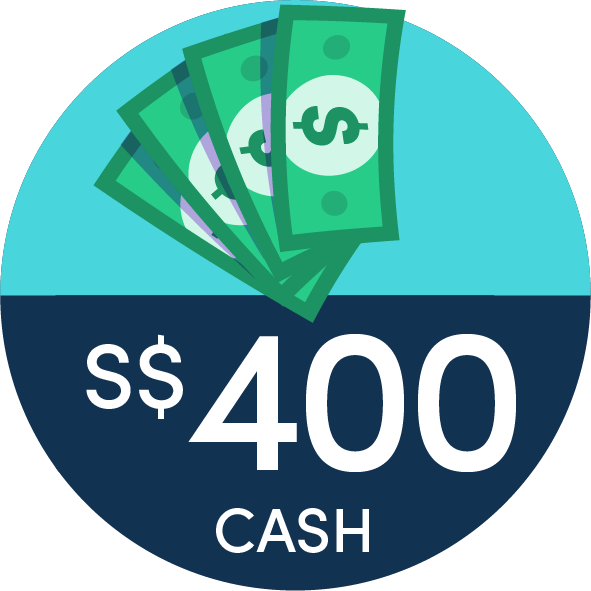
Get S$400 Cash Reward or 6,140 SmartPoints (use SmartPoints earned to redeem the latest Apple products on our Rewards Store) as quickly as 5 weeks —just spend S$500 within 30 days of card approval with your new Citibank Credit Card! T&Cs apply.

OCBC 365 Credit Card
- Cashback on Utility Bills
- 3%
- Cashback on Telco Bills
- 3%
- Min Spend per Month
- S$800
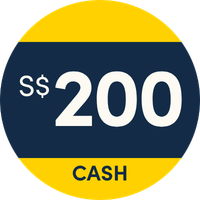
Get $200 Cash or 3,000 SmartPoints (enough to redeem an AirPods 5 worth S$219) when you apply and spend a min. of S$400 within 30 days! T&Cs apply.

CIMB World Mastercard
- With CIMB 0% i.Pay Plan
- 0% Interest Instalments Payments
- One Time Processing Fee
- 3% to 5%
- Tenure
- 6 to 24 months
Apply now and receive a Samsonite Black Label Fanthom Spinner 69/25" EXP TSA Luggage (worth S$1,150) when you spend at least S$2,000 on eligible spends within the first 60 days. T&Cs apply.
.png)
NTUC Link Credit Card by Trust
- savings on groceries and food
- Up to 21%
- petrol savings (on Caltex and Esso)
- Up to 20%
- FX Fees
- 0%
Golden chance to win up to S$8K cashback!
For new credit card customers! Get a sure-win cashback gift of up to S$8,000 when you choose Cashback as your reward. T&Cs apply.
AA.png)
DBS Vantage Visa Infinite Card
- Local Spend
- S$1 = 1.5 miles or 1.5% cashback
- Overseas Spend
- S$1 = 2.2 miles or 2.2% cashback
- Min. Spend per month
- S$0
Compare the Best Cashback Cards for Every Bill
How to Pay Your Electricity Bill With Credit Cards?
SP Group
-
For one-off SP bills:
- Select the “Bills” tab > “Pay Now” to pay your bill
- Add and save your debit or credit card details (Visa / Mastercard / AMEX)
- Select the premise and bills to pay > complete the payment
- Select the “Profile” tab
- Select your preferred payment method
- Select your default card for recurring payments > choose the corresponding account to set it up
- Click “Submit” and you’re done!
Important note:
Since 1 November 2025, SP no longer universally accepts credit card payments for
non-domestic SP utility bills. Credit card payments are now restricted to
domestic / residential accounts only, and are not applicable to business accounts.
Through CardUp
CardUp is a platform that facilitates bank transactions by charging your credit card the designated amount, along with an administrative fee of up to 2.6%. Hence, if your biller does not accept cards, CardUp acts as a credit card–enablement platform by facilitating payment transfers via bank transfer to the biller.
This workaround enables you to charge your electricity bills (no pun intended) to your desired credit card to continue earning cashback, miles, or reward points, or even to meet minimum spend thresholds.
Keep in mind that CardUp transactions are still subject to credit card merchant exclusions. CardUp payments are usually classified as a bill payment service under MCC 7399 (Business Services Not Elsewhere Classified). If your credit card excludes this MCC from earning rewards, you won’t qualify for rebates like cashback, miles, or points. Note:CardUp does not currently support SP Group payments. UOB One and HSBC cards also no longer include CardUp as an eligible merchant.
🌱 Go Green on Electricity! ⚡


Who are the Open Market Electricity Providers in Singapore?
About the Author

Frequently Asked Questions
Which credit card is best for electricity bill payment?
- This question really depends on your lifestyle. The UOB One is an all-rounded card that gives you up to 4.33% on SP bills, but only on the condition that you spend up to $2,000 a month consistently for the quarter. On the other hand, the OCBC 365 card offer 3% cashback with a lower minimum spend ($800/$1,600 per month).
Who are the electricity retailers in Singapore?
- There are quite a number of electricity retailers in Singapore now, and they include Best Electricity, Diamond Electric, Geneco, iSwitch, Keppel Electric, Ohm Energy, PacificLight Energy, Sembcorp Power, Senoko Energy, Sunseap Energy, Tuas Power Supply, Union Power.
What is the average electricity bill in Singapore?
- It differs by household type. According to a survey conducted by GetSolar, bungalows and semi-detached houses incur the highest monthly electricity cost between $441 to $475.
Meanwhile, HDB flats, mansionettes, condos, and terrace houses incur electricity costs between $80 to $211. How to check electricity bills online?
- If you’re still on SP Group’s power grid, you can conveniently view, track, and pay your SP utility bills with the SP app.
However, if you’re buying electricity from another OEM retailer, registering for an e-Services account will allow you to view and download your electricity usage and bill. Is there an online electricity bill calculator?
- Yes, there are several free online electricity bill calculators available on Google. OEM retailers like Keppel Electric even provide their own native calculator to help you determine the best electricity plan prices.
How to pay your electricity bill in Singapore?
- If you’re under SP Group’s power grid, you can access your electricity bill through SP Group’s online portal or their SP app. Otherwise for other retailers, register for an e-Services account to check and pay your electricity bills.
Why didn't I get credit card rewards for my electricity bill?
The most common culprit is your payment channel. The UOB One Card and the OCBC 365 Card only award cashback if you pay directly through your electricity provider’s website or app. Payments via AXS, SAM, GIRO, or certain e-wallets are typically coded under MCC 4900 and are excluded from rewards.
Before paying, check your card's rewards policy. If rewards don't post, contact your issuer to confirm the MCC code. Paying through the SP Utilities app or your retailer's website gives you the best chance of earning cashback.How do I set up recurring payments to ensure cashback?
- Log into your electricity provider's website or app (SP Group, Geneco, Keppel Electric) and select 'Add Payment Method' or 'Set Up Recurring Payment', then enter your card details. The UOB One Card requires you to meet monthly spend tiers ($600, $1,000, or $2,000) for maximum cashback. Meanwhile, the OCBC 365 Card needs $800/$1,600 per month. Setting up recurring card payments helps you hit these thresholds automatically. Make a one-time test payment to confirm it posts as a reward-eligible transaction within a week.
Can I stack government U-Save rebates with credit card promotions?
- Yes. U-Save rebates and card cashback don't conflict. The rebate is credited directly to your SP utilities account before you pay, and card rewards apply to your post-rebate balance. So if your bill is $150 with a $20 U-Save rebate, you pay $130 to your card, and cashback is calculated on that $130. You're not "double dipping," but you do benefit from both programs separately.
What should I do if a promotion or cashback fails to credit?
If your credit card fails to earn its monthly cashback on utilities, follow these steps to check:
- Review your card’s T&Cs to confirm whether utility payments are excluded (commonly with AXS or GIRO).
- Ensure the payment was made through an eligible channel and that the minimum spend requirement was met.
- Call your card issuer’s customer service with your transaction reference number for a manual review if the reward is still missing.
- Keep records and screenshots of all utility bills and credit card transactions.
Are online calculators available for comparing and estimating electricity bills?
- Use the Open Electricity Market (OEM) comparison tool to check plans from SP Group, Geneco, Keppel Electric, and other retailers. The SP Utilities app shows your monthly usage history, lets you compare consumption with similar households, and forecasts future charges. Input your household size and usage to get tailored plan recommendations.
Which payment channel should I use? AXS, online, or GIRO?
- Use online or app payments directly with your provider. GIRO and AXS are almost always excluded from card rewards. Set up recurring or auto-pay card instructions through your provider's platform for the best results.
Can I combine bill rebates from different sources?
- Yes, you can combine government U-Save rebates with card cashback, but you can't "stack" multiple credit card promotions for the same bill. Third-party platforms (like CardUp or PayAll) might allow you to pay your utility bill with your card, however rewards eligibility and fees vary by bank and channel. Always confirm first with your issuer.
Want more MoneySmart in your Google results?
One tap, and we'll turn up more often when you search for money answers.