
MoneySmart Financial is an Exempt Financial Adviser and Registered Insurance Broker licensed by Monetary Authority of Singapore ("MAS").

Everything to Know About Car Accident Insurance in Singapore

Traffic accidents resulting in injuries have increased in Singapore over recent years, and they can happen to even the most careful drivers. When a car accident occurs, your immediate concerns about safety, liability, and insurance premiums can be overwhelming. This guide covers the different types of car accident insurance in Singapore: your mandatory requirements, actionable steps, filing claims, and how to preserve your No Claim Discount (NCD).
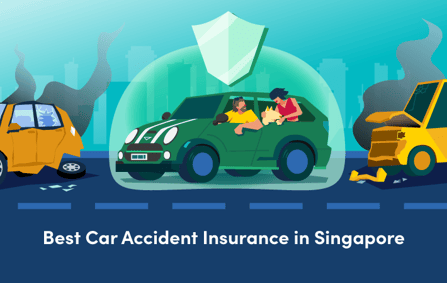
a cartoon couple with pet dog riding in a green car protected by a translucent green bubble shield against car accidents on road with bottom text "best car accident insurance in singapore"

Understanding Your Car Accident Coverage

Singapore’s Road Traffic Act requires all motorists to have valid car insurance that covers minimally third-party liabilities (death or personal injury to others). Driving without insurance is illegal and prevents vehicle registration and road tax renewal.

Third-Party Only (TPO)

As the legal minimum, it covers injury or damage you cause to others in an accident, but does NOT cover repairs to your own car.

If you’re at fault, you have to pay for your own vehicle damage out-of-pocket.

Own Damage coverage

Protects your vehicle in accidents when you’re at fault.

If your car is new, under loan, or has significant value, this ensures your insurer pays for repairs instead of you bearing the full cost.

Optional Car Insurance Add-Ons

Most insurers allow you to enhance your core car insurance with optional add-ons, such as:

  • Personal accident: Additional payout for driver and passengers if injured in an accident.
  • Windscreen cover: Repairs or replaces your car windscreen without affecting your No Claim Discount.
  • Rental car: Covers the cost of a replacement car while yours is being repaired.
  • 24/7 towing assistance: Ensures help is available if your car is immobile after an accident.

Meet our insurance specialists

Drive with the right protection at the right price.
Our specialists don't just push one-size-fits-all policies. We help you navigate the car insurance market to compare coverage, maximise your savings, and ensure your plan is tailored to your specific driving needs. Meet our qualified team specialising in car insurance.
FA1 Photo
Ken Chew
Senior Car Insurance Specialist
‘I’m your Insurance GPS in a world of confusing jargon and skyrocketing premiums. My mission? Finding you the best-fit deal without the usual navigation headaches.’
FA2 Photo
Ashley Lim
Car Insurance Specialist
‘Understanding that comparing car insurance can be a tedious process, I help my customers compare multiple insurers by providing personalised quotes, securing competitive options, offering clear advice, and assisting with policy servicing throughout the term.’
FA3 Photo
Arvin Curia
Senior Car Insurance Specialist
‘I focus on providing practical, cost-effective protection in a simple, easy-to-understand way. No confusing insurance jargon! With over a decade in general insurance, I deliver long-term solutions built on trust and confidence, offering clear advice, honest comparisons, and responsive support so clients feel secure.’

Speak to our Specialists

Best Car Accident Insurance Plans in Singapore: Comparison

Choosing the right car accident insurance can feel overwhelming with so many options on the market. We’ve compared major car insurers in Singapore across their key coverages, benefits, and eligibility to help you find the right plan.

Provider Plan name Coverage type NCD protection Key features Best For
Great Eastern GREAT EV Protect Comprehensive only (EV-specific) Optional add-on (≥40% NCD) EV-focused benefits, battery-related considerations, roadside assistance EV owners with established NCD
Great Eastern Drive and Save Plus Comprehensive only Optional add-on (≥40% NCD) 24/7 claims, roadside assistance Drivers with high NCD seeking comprehensive coverage
UOI UniCar Insurance Comprehensive / TPFT / TPO Add-on (tier-dependent) Flexible coverage tiers with add-on options Customisable plans
MSIG MotorMax / MotorMax Plus Comprehensive / TPFT / TPO Optional add-on (≥30% NCD) Authorised workshop repairs, add-on customisation, small repair benefits (MotorMax Plus) Drivers preferring structured workshop networks
ECICS Private car insurance Comprehensive / TPFT / TPO Complimentary (from 10% NCD) Broad eligibility tiers, built-in NCD protection at low NCD levels Newer drivers or lower-NCD holders
Singlife Lite / Standard / Prestige Comprehensive only Optional add-on (≥30% NCD) Digital claims and e-policy Tech-savvy drivers


Car accident insurance eligibility

  • Age and usage restrictions vary; check if you or your secondary driver qualifies.
  • Private-hire (PHV), commercial, and modified cars are generally not covered.
  • Most plans require the main insured and all drivers to hold a valid Singapore driving license.


  • ❌ Common car insurance exclusions
    Most car insurance policies in Singapore exclude the following coverage:

    • Unauthorised or unlisted drivers
    • Racing or illegal use
    • Intoxicated driving
    • Undeclared vehicle modifications
    • Non-private use (such as taxi or private-hire vehicle operations)

    Back to Top

    Explore Car Insurance Plans in Singapore

    Up to S$120,000
    Up to S$1,000
    Up to S$500 off
    Personal accident coverage
    Medical expenses for driver and passengers
    Repair excess waiver on 1st claim

    (Any / Authorised Workshop)
    • Unlimited coverage for death or injury to third party
    • Up to S$5 million coverage for damage to third party property
    • Up to market value for loss or damage by fire or theft for insured vehicle
    • Up to S$300 benefit + 24/7 towing assistance for roadside accidents anywhere in Singapore, West Malaysia, and Thailand
    • NCD + 5% extra discount if demerit-free in last 3 years (NCD Protector add-on available)
    • Loss-of-Use Benefit of up to S$80 per day (max 7 days) for daily commutes during car repairs
    • Unnamed driver excess: S$2,500 if <3 years’ driving experience; S$500 if >3 years’ driving experience
    Up to S$2,000
    Up to S$5,000
    Up to S$20,000
    Medical expenses coverage
    Accidental damage to private charging station
    Home protection against fire damage from EV charging station

    (Any Workshop)
    • Up to S$120,000 personal accident coverage
    • Unlimited coverage for death or injury to third party
    • Up to S$5 million coverage for damage to third party property
    • Up to S$300 towing benefit + roadside assistance during breakdowns
    • Up to market value for loss or damage by fire or theft for insured vehicle
    • Up to S$1,000 outpatient medical expenses coverage for electric shocks during EV charging
    Up to S$20,000
    Up to S$300
    Unlimited
    Personal accident coverage
    Medical expenses coverage
    Death or injury to third party coverage

    • Free addition of up to 2 named drivers under policy
    • NCD Protector add-on available when NCD ≥ 30%
    • 24/7 emergency hotline for roadside assistance
    Up to S$50,000
    Up to S$500
    S$750 or otherwise
    Personal accident coverage
    Medical expenses coverage
    Standard excess for each claim

    (TPO / TPFT / Comprehensive / Comprehensive Family + NCD Builder)
    • Up to market value for vehicle damage or loss by accidental causes and by fire & theft
    • Up to S$5 million liability coverage to third party for property damage
    • Up to S$300 in towing expenses after accident
    • Unlimited coverage for third party injury or death
    • Up to extra S$500 unnamed driver excess
    • Up to extra S$3,000 young or inexperienced driver excess (< 26 years old and/or valid driving license < 2 years)
    • NCD Protector add-on from 10% NCD onwards
    • Waiver of Excess at ECICS Authorised Workshops:
      • 0–20% NCD: S$250 (with accident footage)
      • ≥ 30% NCD: S$750

    Back to Top

    What to Do When Encountering Car Accidents in Singapore?

    Witnessing a car accident is never pleasant regardless of the driver or witness, but your actions can be the difference between life or death. This guide walks you through insurance claims and witness responsibilities, with specific actions for drivers involved and witnesses at each stage.
    Step 1

    Assess the situation quickly


    For drivers involved:

    • Check for injuries to yourself, passengers, and others
    • Move to a safe spot without endangering anyone further
    • Exchange factual details only (vehicle info, contact details)

    For witnesses:

    • Assess the situation from a safe distance 
    • Check for injured parties in immediate danger or need urgent medical attention
    • Vehicles in dangerous positions (blocking traffic, risk of further collision)
    • Fire, fuel leaks, or other hazards

    If there are injuries, fatalities, hit-and-run, or property damage, dial 999 (police) and 995 (ambulance) immediately.

    For minor accidents with no injuries, you'll report to authorities later (see Step 4).

    Step 2

    Collect essential evidence


    For drivers involved:

    • Note down vehicle numbers, make, model, and colour of all vehicles involved
    • Record names, NRIC/FIN numbers, contact details, and addresses of all involved parties
    • Take clear photos of damage areas on vehicles, the scene (wide shots and close-ups), and road signs, traffic lights, or skid marks (if any)

    For witnesses:

    • DO NOT interfere with evidence unless necessary (e.g. safety reasons)
    • Preserve the scene for authorities to thoroughly investigate
    • Note your own contact information and describe what you saw
    • If you have dashcam footage, not the timestamp and submit a copy
    Step 3

    Notify insurer (Driver only)


    Call your insurer’s accident reporting hotline, even if you don’t intend to make a claim.

    Under General Insurance Association (GIA) rules, All accidents must be reported within 24 hours or the next working day

    Delayed reporting may void your car accident coverage.

    Step 4

    File a police report


    For minor accidents with only vehicle damage, a police report is optional, but file one if unsure about fault or if the other party is uncooperative.

    For drivers involved:

    • At the scene: Call 999 for the police, otherwise visit nearest traffic police station or neighbourhood police centre
    • Bring: NRIC, driving license, vehicle registration, accident photos
    • During statement: Focus on facts (positions, traffic conditions, sequence), not fault interpretations
    • Get a copy of your insurance claim
    • Important: Not filing a required report is an offence and may result in claim rejection

    For witnesses:

    • Cooperate with police and provide contact info
    • During statement: Share factual observations only, no speculations
    • Be specific on time, vehicle positions, traffic lights, weather, road conditions
    • Providing statements are on a voluntary basis
    • Submit a copy of dashcam footage, if relevant
    Step 5

    File insurance claim & get payout (Driver only)


    Gather before claiming:

    • Accident photos and damage photos
    • Police report (if filed)
    • NRIC, driving license, insurance certificate
    • Repair quotes/invoices
    • Claim form

    Filing process:

    1. Submit documents via insurer’s claims portal or motor survey workshop
    2. Take your car to an approved workshop for damage inspection
    3. During evaluation, insurer may request further clarification or inspection
    4. If approved, repairs will be arranged or costs will be reimbursed
    5. Depending on complexity, repairs can take a few days to several weeks
    Step 6

    Common claims blocker


    To ensure your car accident claim gets fully approved, avoid:

    • Late or missing insurer notification (within 24 hours)
    • Incomplete accident information or missing documents
    • Skipping required police report or using unauthorised workshops
    • Making informal agreements at the scene without proper documentation
    • Insufficient photos or scene evidence

    How to Manage Car Accident Claims & Appeals?

    After filing your claim, here’s how to track it and handle any issues.

    Track your claim

    • Use insurer’s online claims status checker or call their helpline to track
    • Keep copies of all claim receipts, accident reports, repair invoices, and correspondence
    • For straightforward claims, you can expect resolution within a few days to several weeks

    Restore your NCD

    If not found guilty of a car accident and your insurer recovers costs from the other party, your NCD may be reinstated. Some insurers even offer “NCD Protector” add-ons to protect your NCD after an at-fault claim, subject to policy availability.

    Appealing denied claims

    Insurers typically deny claims for late reporting, missing documents, or policy breaches (e.g. unauthorised repairs). For fastest turnaround, you must appeal within a week of the decision (14–30 day deadline).


    To formally appeal, follow these steps:

    1. Contact insurer for full explanation of claims denial
    2. Supply additional evidence or missing documents
    3. Insurer conducts internal review

    If still dissatisfied, escalate to FIDReC (Financial Industry Disputes Resolution Centre): 6327 8878 or www.fidrec.com.sg

    Background image

    Don’t Wait Till Accidents Happen 🚗

    Protect yourself on the roads with comprehensive car insurance coverage from Singapore’s top insurers.

    Car Accident Scenarios in Singapore

    Some accident situations require extra steps, here’s what to do:

    1. Accident involving rental or foreign-registered car

    • Police report is mandatory for foreign vehicles (do this immediately)
    • Exchange details including rental agreement or vehicle entry permit information
    • Notify both your insurer and the rental company promptly
    • Collect rental agreement numbers, rental company contact, and car plate information

    If you're renting: Always verify insurance coverage before driving off. Most rental companies offer CDW or TDW options for protection.

    2. Hit-and-run accident

    • Call 999 immediately to report to police
    • Note the fleeing vehicle's details if safe: license plate, make, model, color, direction
    • Get witness contact information and their account of what happened
    • Take photos of the damage, scene, and any debris left behind
    • Report to your insurer with the police report number
    • File a claim under your own policy (typically covered by hit-and-run provision)

    3. Lost or missing documents

    • If documents are stolen, file a police report and get a formal report number
    • Notify your insurer immediately with the police report
    • Replace critical documents ASAP (NRIC via ICA, driving license via LTA)
    • Declare the loss in writing to your insurer

    4. Uncertain about whose fault it is

    • Gather all evidence: photos, dashcam footage, witness contact details
    • Report to your insurer promptly
    • Avoid speculating on fault by focusing on facts only (positions, sequence of events) in your statement
    • Insurers determine liability based on evidence, not assumptions
    Background image

    FAQs About Car Accident Insurance in Singapore

    What are the eligibility requirements to make a car accident claim?

    You can claim if:
    Requirement Details
    🪪 Named or authorised driver
    You must be listed on the policy or have written authorisation
    📄 Valid driving license
    License must be valid in Singapore at time of accident
    Active policy period
    Accident must occur while policy is active and for approved uses
    📋 Compliance
    You must follow all reporting and repair protocols in your policy

    Note: Some policies exclude commercial use or unapproved rentals. Always review your policy's permitted uses before driving.

    What happens if I’m late in reporting the accident or submit incomplete information?

    Late or incomplete reporting is one of the leading reasons claims are denied. Here's why it matters:


    • Your claim may be denied outright if you don't report within the required timeline. 
    • Your No Claim Discount (NCD) can be docked by 10% or more, and in severe cases, your policy may be voided entirely for serious breaches.


    ⚠️ Critical deadline: Report to your insurer within 24 hours or by the next working day, even if you don't intend to claim. 


    This is a mandatory requirement under Singapore insurance standards. Missing this window weakens your entire claim whereby evidence becomes harder to verify, witness memories fade, and insurers may assume dishonest intent.

    How can I maximise my payout and avoid claim rejection?

    Beyond timely reporting and completely documentation, focus on these strategies for the best chances of successfully approved claims:


    • Use authorised workshops only. Out-of-panel repairs typically result in claim reduction or denial.
    • Factual accounts only. Don’t speculate and stick to factual descriptions and evidence only (positions, timing, sequence of events).
    • Follow up after repairs. If hidden damage emerges, submit supplementary claims before time limits expire.
    • Organise all correspondence. Keep receipts, claim confirmations, and insurer communications in one place.


    Most straightforward claims resolve in days to weeks when all steps are followed correctly.

    How do I file a car accident insurance claim in Singapore?

    Filing a car accident claim roughly follow these four steps:


    1. Report all accidents to your insurer within 24 hours or by the next working day, even if you don’t intend to claim. Most insurers have dedicated accident hotlines available 24/7.
    2. Gather essential documents: accident report, police report (if required), photographs of all vehicles and the scene, your NRIC, driving license, insurance certificate, and any repair quotes or invoices.
    3. Use only your insurer’s authorised workshops for repairs.
    4. Fill out your insurer’s claim form and submit it, together with the required supporting documents, via their portal or reporting centre.

    Are there special steps for rental cars, third-party claims, or disputed liability?

    Scenario What to do
    🚗 Rental or foreign vehicles
    • Police report generally required.
    • Notify both the rental company and insurer immediately.
    • Collect rental agreement numbers and company contact info.
    • If you crash without insurance: personal liability for all damages, legal repercussions (Road Traffic Act violations), breach of rental contract, and difficulty renting in future.
    ⚖️ Third-party liability
    • Don't settle privately except for minor fender-benders.
    • Collect evidence (photos, witness details, dashcam footage) and let insurers handle negotiations.
    • Private settlements without proper reporting can void coverage.
    Disputed liability
    • Provide all available evidence (witnesses, dashcam, photos).
    • Report promptly; avoid speculating about fault.
    • If unsatisfied, appeal through your insurer or escalate to FIDReC (6327 8878).

    What exclusions or policy rules often block car accident claims?

    • Unauthorised drivers (not listed on policy or with invalid license)
    • Driving under the influence of alcohol or drugs
    • Prohibited purposes (unauthorized hire, racing, commercial use)
    • Non-compliance with reporting or repair requirements
    • Dishonest evidence or fraud


    Review your policy's exclusions carefully before driving. Most policies outline these restrictions clearly in the terms section.