Key Takeaways
TPFT insurance adds fire and theft cover for your own vehicle on top of the third party liability that Singapore law requires every motorist to carry.
It doesn’t pay for accident damage to your own vehicle, so a collision you cause, a scrape in a car park or a cracked windscreen is usually on you.
TPFT is often positioned for older or lower-value vehicles, where comprehensive premiums can feel out of proportion to what the vehicle is worth.
Your cover type is printed on your policy schedule, so check it at renewal and get quotes for all 3 tiers when you compare car insurance in Singapore.
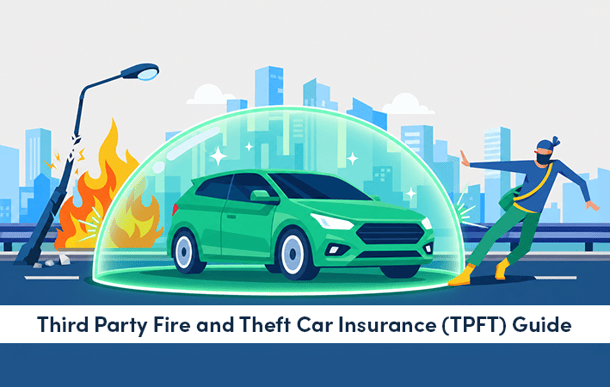
TPFT insurance, short for third party, fire and theft, is the middle tier of motor insurance in Singapore. It covers what you owe other people after an accident you cause, plus your own car or motorcycle if it’s damaged by fire or stolen.
That middle position is what makes it tricky. TPFT costs more than the legal minimum but leaves out the accident damage most drivers assume is covered, so knowing where it stops helps you decide whether it fits your vehicle and your savings.
How TPFT Insurance Works
Think of motor insurance as 3 layers stacked on top of each other. Each tier keeps everything from the one below it and adds more protection for your own vehicle.
The legal minimum it builds on
Under the Motor Vehicles (Third-Party Risks and Compensation) Act 1960, you can’t use a vehicle in Singapore without third party cover. At minimum, the policy must cover your liability for the death of or bodily injury to other people, plus certain hospital expenses they incur.
Driving without it is an offence, with a fine of up to $1,000, jail of up to 3 months, or both, and usually a 12-month driving ban. In practice, third party policies sold by insurers also cover damage you cause to other people’s property, such as their car, a lamp post or a shopfront.
What the fire and theft layer adds
TPFT keeps that third party cover and adds two protections for your own vehicle. The General Insurance Association (GIA) describes it simply as “fire damage to, or theft of, your vehicle”.
Fire: loss or damage from an insured fire, which policies may define to include events like explosion, self-ignition or lightning
Theft: loss of the vehicle, or damage to it, caused by theft, burglary or housebreaking, usually backed by a police report
Payouts for a write-off are typically capped at your vehicle’s market value at the time of loss, not what you paid for it. Many policies also bundle small extras, such as towing after an insured incident.
What TPFT doesn’t cover
The gaps matter more than the inclusions, because they’re what you’d pay for yourself.
Situation | Third party only | TPFT | Comprehensive |
Injury or damage you cause to others | ✅ Covered | ✅ Covered | ✅ Covered |
Fire damage to your own vehicle | ❌ Not covered | ✅ Covered | ✅ Covered |
Theft of your vehicle | ❌ Not covered | ✅ Covered | ✅ Covered |
Accident damage to your own vehicle | ❌ Not covered | ❌ Not covered | ✅ Covered |
Windscreen damage | ❌ Not covered | ❌ Not covered | ✅ Covered |
Flood damage | ❌ Not covered | ❌ Not covered | Usually an optional add-on |
Wear and tear or breakdowns | ❌ Not covered | ❌ Not covered | ❌ Not covered |
Disclaimer: Based on the GIA motor insurance consumer guide; exact cover depends on each policy’s wording. Accurate as of 29 October 2026.
All 3 tiers also exclude claims where the vehicle was used outside its permitted purpose, such as private-use cars doing ride-hailing or deliveries. The same applies if the driver wasn’t authorised on your Certificate of Insurance, was unlicensed, or was under the influence.
Insurers offering TPFT on MoneySmart
Not every insurer offers TPFT, and some only show it once you request a quote. Based on insurers’ own websites, these providers listed on MoneySmart offer TPFT:
Insurer | TPFT for cars | TPFT for motorcycles | Third party property damage limit |
DirectAsia | ✅ Available | ✅ Available | Up to S$5 million (cars) |
Etiqa | ✅ Available | ✅ Available | Not stated online |
Income | ❌ Not listed online | ✅ Available | Up to S$500,000 (motorcycles) |
UOI | ✅ Available | ❌ Not listed online | Not stated online |
Other insurers may still provide, so ask for a quote if you’d like TPFT from them.
Disclaimer: Based on each insurer’s official website or brochure and accurate as of 29 October 2026. Property damage limits are for TPFT cover only; where an insurer doesn’t publish one, check the policy wording before you buy.
TPFT vs Third Party Only vs Comprehensive
TPFT sits in the middle on both cover and cost. Comprehensive costs more because the insurer is paying for everyday mishaps, like a reversing bump or a scraped door, not just rare events like a total theft.
Cover type | Your own vehicle is protected against | Relative premium | ⭐ Best for |
Third party only | Nothing | Lowest | Very low-value vehicles you’d write off rather than repair |
TPFT | Fire and theft | Middle | Older or lower-value vehicles where total loss is the main worry |
Comprehensive | Accidents, fire, theft, windscreen and more | Highest | Newer, valuable or financed vehicles |
The choice comes down to how much risk you’re willing to keep. A lower premium today means you’d fund most repairs yourself, so the real question is whether you could afford a major repair bill without strain.
Real-World Scenarios
These examples show where TPFT pays out and where it doesn’t. Exact outcomes depend on your policy wording.
Your parked car catches fire from an electrical fault. TPFT covers the fire damage, up to the car’s market value if it’s written off.
Your motorcycle is stolen from an HDB car park. TPFT covers the loss once you’ve made a police report and shown you took reasonable care, such as locking it.
You rear-end another car at a traffic light. TPFT covers the other driver’s repairs and any injuries, but you pay to fix your own car.
Thieves take your side mirrors and a dashcam. This partial theft is a grey area, and personal belongings left inside are generally not covered at all.
A flash flood damages your engine. TPFT doesn’t cover flood damage, and even comprehensive plans may treat it as an optional add-on.
TPFT Insurance In Singapore: Costs, Loans And Motorcycles
What affects your TPFT premium
Insurers use their own pricing, but these factors commonly shape your quote:
Vehicle: make, engine size, age and market value
Driver profile: age, driving experience and who’s named as an authorised driver
Claims history: past claims and traffic offences, which also affect your no-claim discount (NCD)
Usage: private versus commercial use and how much you drive
Your choices: the excess you agree to pay on each claim and the add-ons you select
Of these, excess and add-ons are the levers you can adjust at purchase or renewal. Never under-declare details like commercial use or past claims to lower your premium, as insurers can reject claims or void the policy over misrepresentation.
When TPFT tends to make sense
TPFT is often positioned for older vehicles. One insurer, for example, markets its TPFT plan to owners of cars over eight years old. As a car ages and its market value falls, comprehensive premiums can become harder to justify against what you’d receive if it were written off.
TPFT also suits you if your main worry is losing the whole vehicle, and you have enough savings to cover accident repairs yourself. If a large repair bill would strain your finances, comprehensive cover is usually the safer choice.
If your vehicle is financed
Check your car loan or hire-purchase agreement before downgrading cover, as it may set a minimum level of insurance. Your bank may also need to be told about any change to your motor insurance, so get its confirmation before you switch.
TPFT for motorcycles
TPFT works the same way for motorcycles: third party liability plus fire and theft cover for the bike. Bike plans may offer different add-ons, such as rider or pillion personal accident cover, so compare them separately from car plans.
How to check your current cover
Open your latest policy schedule or e-policy from your insurer’s email, portal or app.
Find the stated cover type, labelled as third party, third party fire and theft, or comprehensive.
Check the benefits table for fire, theft and own accident damage, plus any add-ons.
Contact your insurer if anything is unclear, especially after an auto-renewal.
If you switch insurers or cover types, make sure the new policy starts before the old one ends, as even a short gap in third party cover is illegal. For a broader primer, read our car insurance guide.

 Why Buy Through MoneySmart?